
How Rooftop Solar Improves Asset Valuation
What Appraisers, Buyers, and Investors Look for in Solar-Leased Properties
For institutional commercial real estate investors, value creation is about more than occupancy and rent roll. It’s about the hidden opportunities within an asset and one of the most overlooked is right overhead.
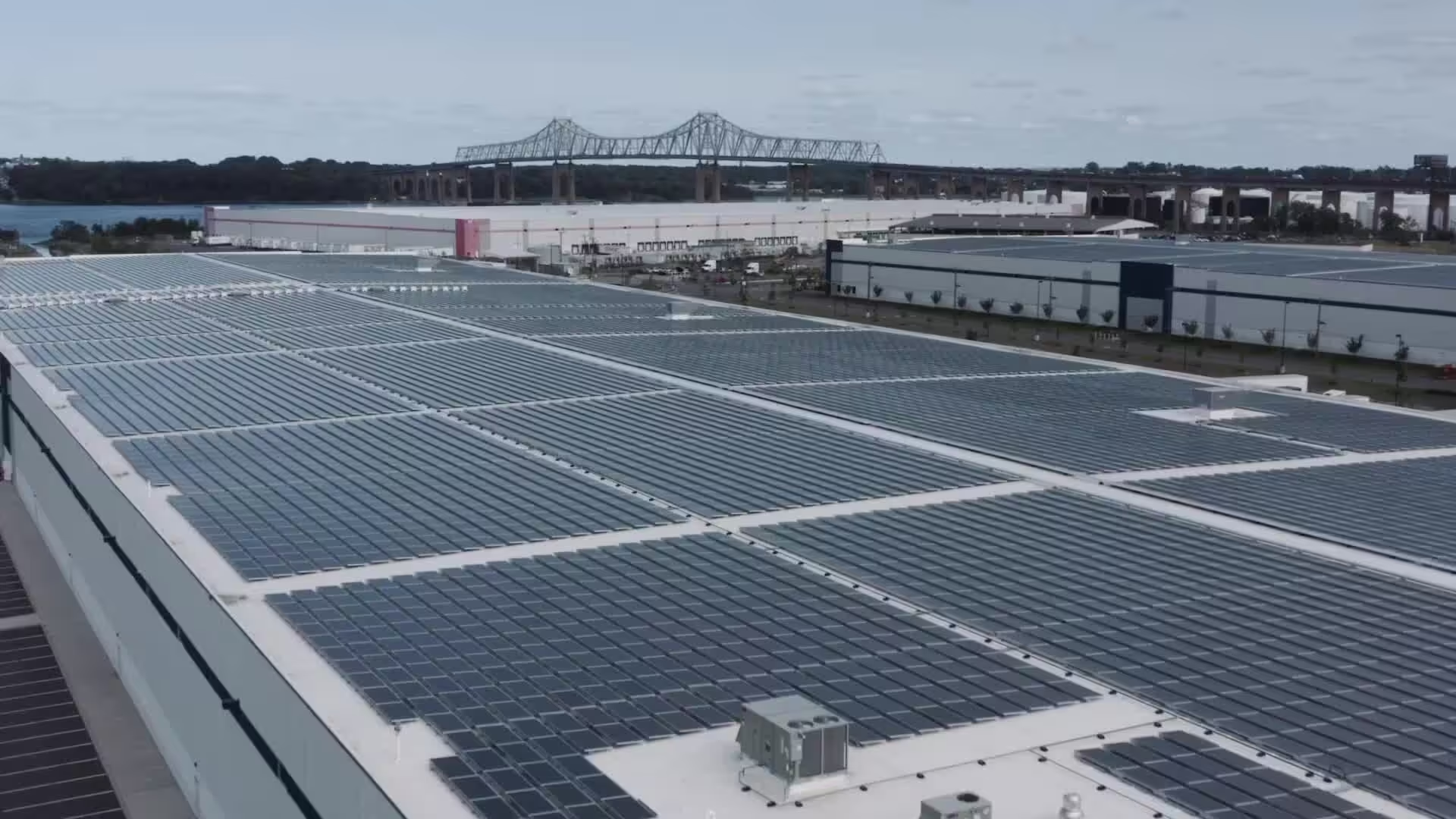
When structured properly, commercial rooftop solar increases net operating income which, in turn, enhances asset valuation, improves underwriting favorability, and helps differentiate the property at sale. Larger installations, especially those that benefit from economies of scale, could see even greater valuation upside.
Here’s how today’s investors, appraisers, and buyers are thinking about solar and what they expect to see.
Cap Rate Math
Solar leases can meaningfully impact valuation. Here’s an example:
- 500,000 sq ft building
- $0.60/sqft = $300,000 annual lease income
- Applied at a 6% cap rate
- = $5 million increase in asset valuation
That’s real upside without CapEx or asset encumbrance.
In recent deals, we’ve seen valuation bumps of 3–5% due to solar lease income alone. Especially in core markets, buyers value long-term, off-tenant revenue that improves deal returns without increasing risk.
Solar Lease Adds Predictable NOI
Rooftop solar leases generate passive, contracted income, over 20 years, without CapEx or tenant disruption. For asset managers and REITs, this income is:
- Non-operational, meaning it’s not tied to tenant volatility
- Long-term, backed by contract, with creditworthy solar developers
- Stabilized and recurring
Because the building owner isn’t responsible for the system or maintenance, lease income is typically modeled as high-efficiency NOI.
Underwriting: What Buyers Want to See
When evaluating a solar-leased property, experienced buyers look for:
- A signed, assignable lease with defined terms
- Annual lease income
- Clear roof access and non-interference with tenants
- Proof of developer insurance and liability coverage
- High-value offtake and revenue streams for the developer
Bonus: Investors appreciate seeing how the solar lease income offsets operating costs or, in some cases, improves tenant retention by supporting sustainability goals.
What Appraisers Actually Ask
Appraisers working on solar-inclusive comps across multiple markets tend to ask these questions:
- Is this lease standard market practice for the region/asset type?
- Who is the counterparty? Are they credible?
- How is the lease structured — fixed income, escalators, risks?
- Is there a history of similar lease adoption in comparable assets?
- How does this lease affect building operations or future CapEx?
When the answers are clear and the lease is presented with comps and NOI impact, appraisers are increasingly supportive of adding solar income to the valuation model.
Strategic Fit: How Solar Roof Leases Work Across CRE Scenarios
Commerical rooftop solar isn’t just for one type of asset or owner as it can be tailored to fit a wide range of investment strategies. Here’s how solar lease income aligns with different ownership structures and asset profiles:
By Ownership Structure:
- General Partners and Asset Managers
Use solar lease income to stabilize NOI and increase valuation ahead of a recap or sale.
- Limited Partners / Passive Investors
Benefit from fixed, long-term income without additional operational complexity or capital outlay.
- REITs and Long-term Asset Holders
Leverage solar to create repeatable, lease based income that fits portfolio-level value-creation goals.
By Asset Lifecycle:
- Stabilized Assets
Solar adds long-term NOI boosting returns without disrupting tenant leases.
- Value-Add Assets with Newer Roofs
Where rent growth is limited, solar creates a new income stream with zero CapEx required.
- Pre-Sale Assets
A solar lease in place can enhance buyer interest and underwriting appeal especially in competitive markets.
- Long-Term Hold Assets
Solar aligns well with hold strategies, creating reliable cash flow 20+ years
This is about NOI. It’s about valuation. It’s about adding income in a way that doesn’t require a dime of your capital.
_
Connect with Solar Landscape today to explore the solar potential of your portfolio and take advantage of the growing opportunity of onsite clean energy.